Repetitive-process automation
Workflows that move data between your systems (CRM, ERP, spreadsheets, email) without manual intervention. Built in custom code or with self-hosted n8n when it fits, not on SaaS with monthly per-execution fees.
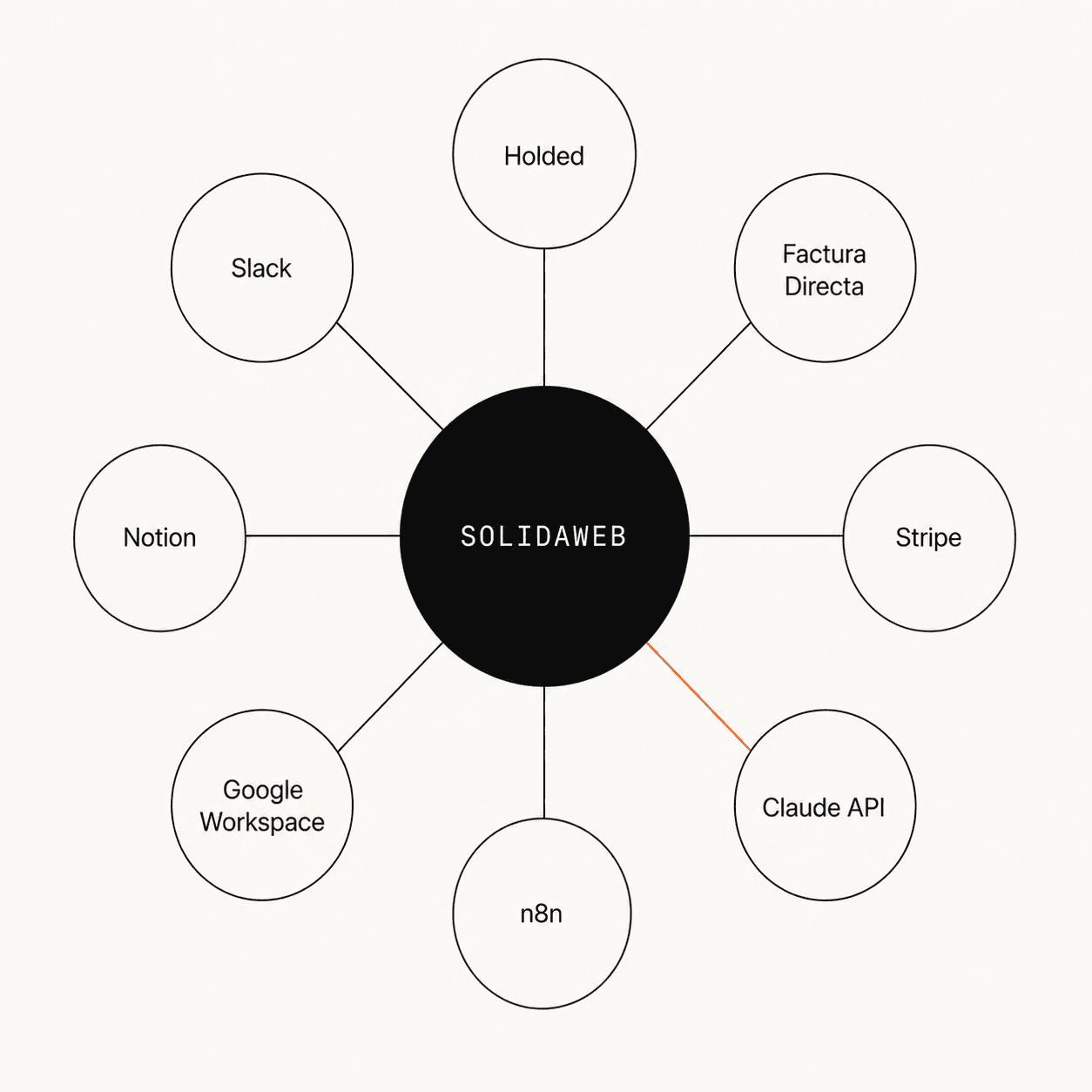
I build automations and AI-powered tools for companies in Spain. Code is yours, integrated with the software you already use (Holded, Factura Directa, in-house ERPs, Notion, Slack), without the recurring subscriptions of no-code platforms. In Catalonia, 25.6% of companies already use AI according to INE; the rest haven't started yet.
If your team loses hours every week on repetitive tasks (preparing invoices, answering recurring questions, moving data between systems, generating reports from Excel), this service is for you. According to INE, 21.1% of Spanish companies with 10+ employees now use AI, up from 12.4% the year before, year-on-year growth of 36.2%. In Catalonia the figure rises to 25.6%. But the data point few people share: according to the Banco de España, 45.8% of companies cite lack of qualified personnel as the main obstacle, above the 40.8% citing cost. The problem isn't paying for it; it's finding someone who can build it. I'm that someone: a freelance developer who writes custom code instead of reselling Make, n8n, or Zapier subscriptions you'll eventually have to migrate off.
Every project is different, but most fit into one of these blocks. Everything is your code, hosted where you decide, integrated with the tools you already pay for.
Workflows that move data between your systems (CRM, ERP, spreadsheets, email) without manual intervention. Built in custom code or with self-hosted n8n when it fits, not on SaaS with monthly per-execution fees.
Automatic email classification, meeting summaries, internal document search, customer-support assistants. Using Claude, OpenAI, or self-hosted open-source models depending on budget and data sensitivity.
Connection to Holded, Factura Directa, FacturaScripts, Anfix, or your in-house ERP. Catalog, customer, and invoice sync. Ready for Verifactu and B2B electronic invoicing before the legal deadlines.
The EU AI Act reaches full application in August 2026. I design AI implementations with risk classification, activity logging, human oversight, and GDPR compatibility from day one.
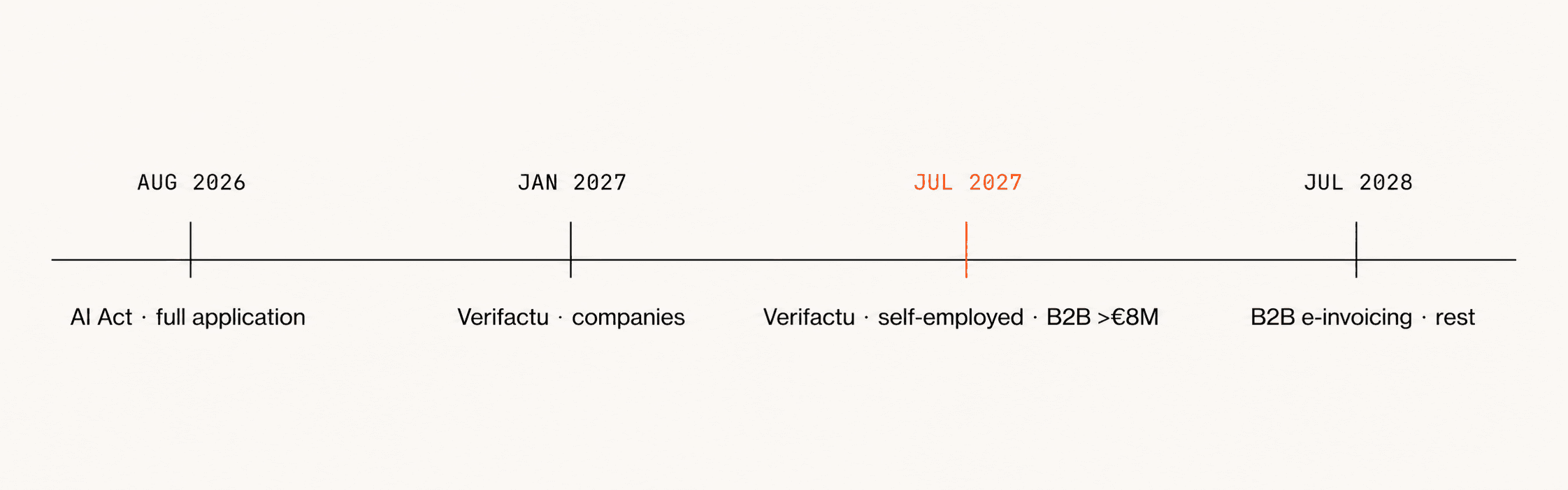
Verifactu is mandatory from January 1, 2027 for companies and July 1, 2027 for self-employed. B2B electronic invoicing (Ley Crea y Crece) is mandatory from July 2027 for companies with revenue over €8M, and from July 2028 for the rest. I implement both integrated with your current flow.
The Kit Digital AI category offers grants of up to €6,000 from April 2026. For Segment V companies (100-249 employees), Business Intelligence and Process Management reach €19,000 each, with a total available grant of €29,000. I help align the project with the categories that apply.
Code is delivered as a Git repository you own, with technical and operational documentation. If you decide to change developer tomorrow, someone else can read and maintain it. You're not locked in to a vendor charging you more for the same features.
Every project closes with documentation on how it's built, how it's maintained, what it costs to operate per month (servers, APIs, models), and a training session so your team uses it without depending on me.
I don't replace your stack. The code I write connects to the tools your team already knows, via the APIs those tools expose.
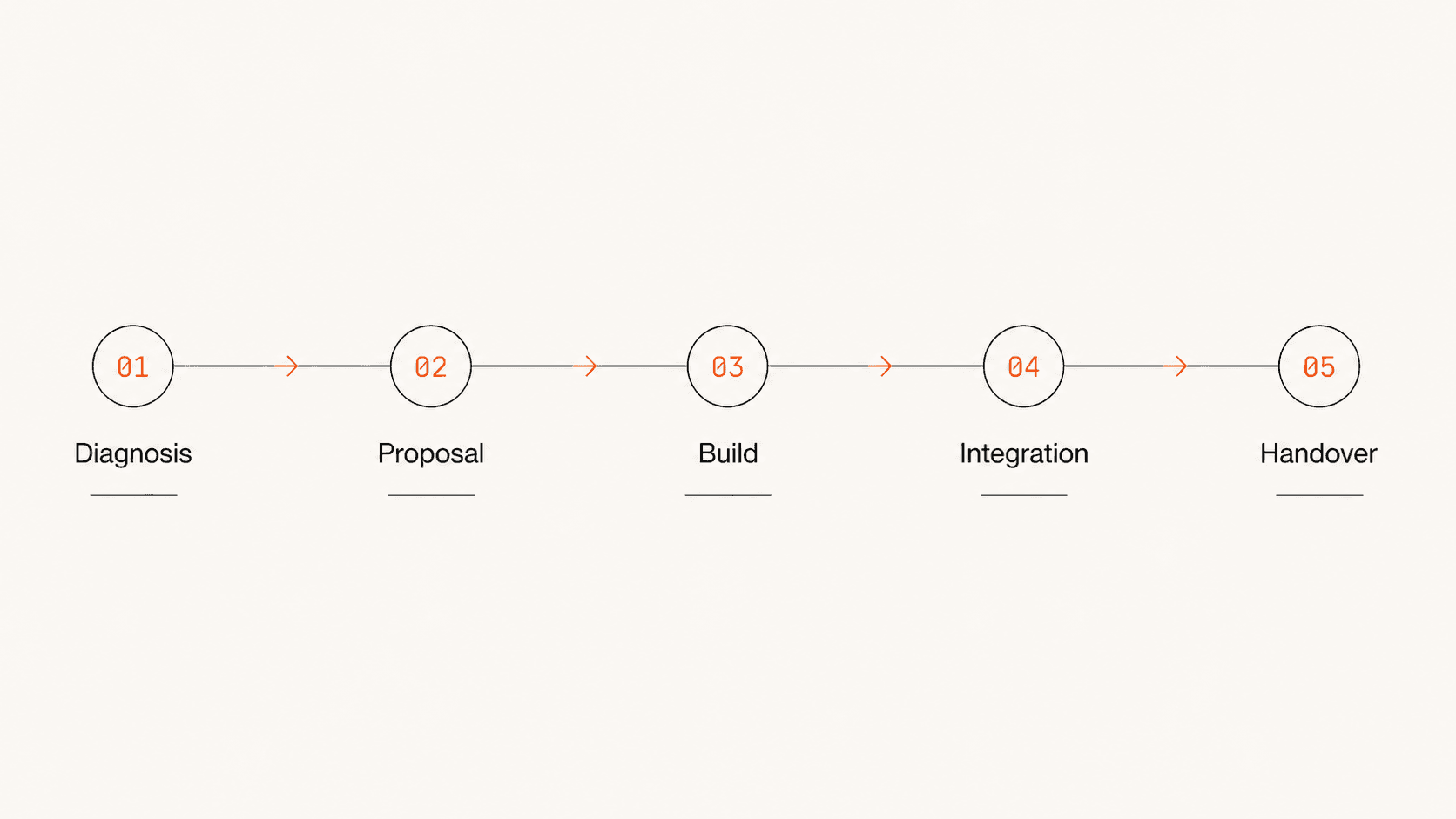
30-60 minute call to understand which processes consume your time, what tools you use, and which data is sensitive. I leave with a clear sense of what to automate first so payback arrives quickly.
Written document with the problem, proposed technical solution, which APIs and models I'll use, estimated monthly operating cost, timeline, and fixed price. If it fits, we sign and I start.
Development in code, with commits you can review if you want. I keep a test environment separate from yours. Weekly demos so you see progress and we can course-correct before it gets expensive.
Connection to your systems in staging. Tests with real data (anonymized if needed), edge-case validation, and legal-compliance checks (GDPR, AI Act by risk class).
Launch, documentation handed over, training session with your team. You keep the code, the repository, and the freedom to continue on your own or with another developer. Optional hourly support as you need it.
A fixed package doesn't make sense here: scope depends on which processes we automate and which systems we connect to. We work on a custom quote, with a defined floor for viable projects.
The €2,500 floor covers small, well-defined projects (1-2 automations, one integration). Typical SMB projects run €3,500 to €8,000, depending on flow count and integrations. The first call is free and no-obligation: if your case doesn't fit, I'll tell you directly.
The floor is €2,500 for small, well-scoped projects (1-2 automations, one integration). Typical SMB projects sit between €3,500 and €8,000, depending on how many flows we cover and which systems we integrate. Custom-model AI implementations or complex ERP integrations can reach €10,000-15,000.
Price is closed in the initial proposal, not by estimated hours that later grow. What drives project cost up: number of automated flows, integration complexity (documented APIs vs. legacy systems), data volume, special compliance requirements (high-risk AI Act, GDPR with sensitive data), and whether the AI model is self-hosted or consumed via API. The first diagnostic call is free and ends with a clear range before you sign anything.
The processes with the highest return are usually the ones you already do many times a month and that consume expensive people's time. The four typical candidates: invoice preparation and sending, responses to recurring queries (via email or chat), data extraction from documents (quotes, delivery notes, contracts), and internal reporting currently built by hand in Excel.
For payback to arrive quickly, it's better to start with one or two processes, not everything at once. If the team spends 10 hours a week classifying emails or writing standard replies, automating that usually recovers the investment in 2 to 4 months. Larger projects (generative-AI assistants, semantic search over private documents, decision-making agents) can be very profitable, but they require more design and aren't usually the recommended first project.
2-4 weeks for a small automation with well-documented integrations (one flow, one or two APIs). 4-8 weeks for typical SMB projects (multiple flows, integration with your ERP or accounting software). 8-16 weeks when there's custom-model AI, legacy-system integrations, or AI Act requirements demanding specific documentation.
Timelines assume your API access credentials (Holded, your ERP, Google Workspace, whatever applies) are available in week one. The usual bottleneck isn't development but access: getting API keys, admin permissions, and real test data tends to take longer than expected in companies with multiple departments. If we work in parallel from the start, timelines hold.
Yes. The Kit Digital AI category offers grants of up to €6,000 from April 2026 for AI-solution implementation. The Business Intelligence and Process Management categories offer up to €19,000 each in Segment V (100-249 employees), with a total available grant for that segment of €29,000.
The typical process: we review which categories fit your project (it can be one or several combined), I help you draft the technical documentation required for the application, and we coordinate with an accredited digital agent to submit the grant. The program is in force under Orden TDF/39/2026 until funds run out, so there is no fixed deadline. If your SMB has already used its full grant, the project is still viable; only who pays for it changes.
Because several legal obligations converge around that date and most of them require touching invoicing and process software. Verifactu is mandatory on January 1, 2027 for companies and July 1, 2027 for self-employed. B2B electronic invoicing (Ley Crea y Crece) is mandatory from July 2027 for companies with revenue over €8M, and from July 2028 for the rest. The AI Act reaches full application in August 2026.
If you're going to touch your invoicing system to comply with Verifactu or B2B, it's the natural moment to add the automations you've been putting off. Implementing two separate changes costs twice as much as implementing one well-planned change. For companies already thinking about AI, the AI Act marks the difference between implementing with compliance from the start (cheaper) and having to redo audits retroactively (much more expensive).
It depends on the risk classification of the specific use case. Most SMB implementations fall under limited risk (chatbots, internal assistants, summaries) or minimal risk (automatic classification, internal search), with manageable obligations: user transparency, human oversight on relevant decisions, basic activity logging. Only uses in sensitive sectors (healthcare, hiring, credit) fall under high risk, with impact-assessment requirements.
What changes in August 2026: obligations for AI users (not just providers) become fully applicable. That means if your company uses an AI assistant with customers, you have to be able to show there's human oversight, transparency, and basic logging. Building the solution with these requirements from the start is relatively cheap. Retrofitting them later because an audit lands is much more expensive. I design every project with the risk class identified and the corresponding controls documented.
The typical automation agency in Spain resells subscriptions to Make, n8n, or Zapier, charges a one-time implementation plus the platform's monthly fee. As a freelance developer, I write your code in your repository, with known operating costs (servers and APIs you pay directly) and no functionality ceiling when you reach complex flows.
There are cases where the agency is the right answer: teams without an internal technical profile, simple flows that no-code platforms cover well, and low volume where monthly subscriptions don't scale. There are others where custom code wins: integrations with Spanish systems (Verifactu, electronic invoicing, ERPs not friendly to no-code), flows with logic the platforms don't express well, sensitive data you'd rather not move through third-party servers, and high volume where fees stack up. The first call ends with an honest recommendation, even if it's 'agency'.
No. I always work by integrating with what you already use: Holded, Factura Directa, Anfix, FacturaScripts, Google Workspace, Notion, Slack, your in-house CRM or ERP if it has an API. Changing the base software is a separate, usually larger project and isn't justified by automation alone.
What I do evaluate in the initial diagnosis: whether your current software has a documented API that allows what you want to automate. Most modern SaaS does (Holded, Factura Directa, Google Workspace). Some older ERPs don't, and in those cases it's often more cost-effective to build a bridge or, in extreme cases, consider replacement. But that decision is yours, not the automation project's.
The AI Act, Verifactu, and B2B electronic invoicing define a mandatory implementation window between 2026 and 2028. Designing automation now aligns compliance with the rest of the project and avoids redoing integrations separately.
Book a 30-minute call. I help you identify what to automate first so payback arrives fast, and tell you honestly whether your case needs custom code or whether a standard SaaS solution is enough. No commitment.
Not templates or mockups: two live sites for real clients. Open them and look around.
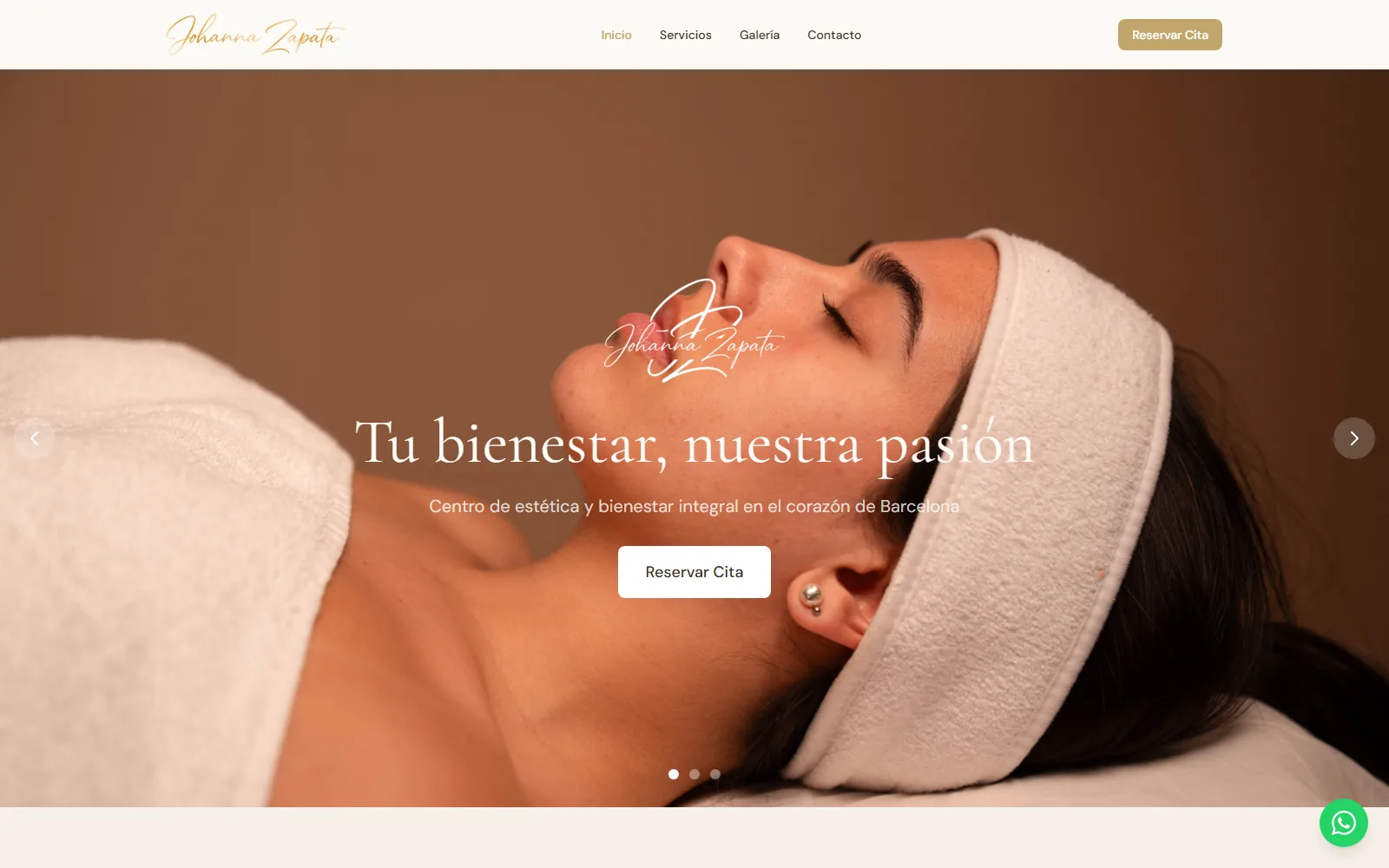
Beauty and wellness centre in Barcelona. Services, gallery, appointment booking and direct WhatsApp contact.
Visit the site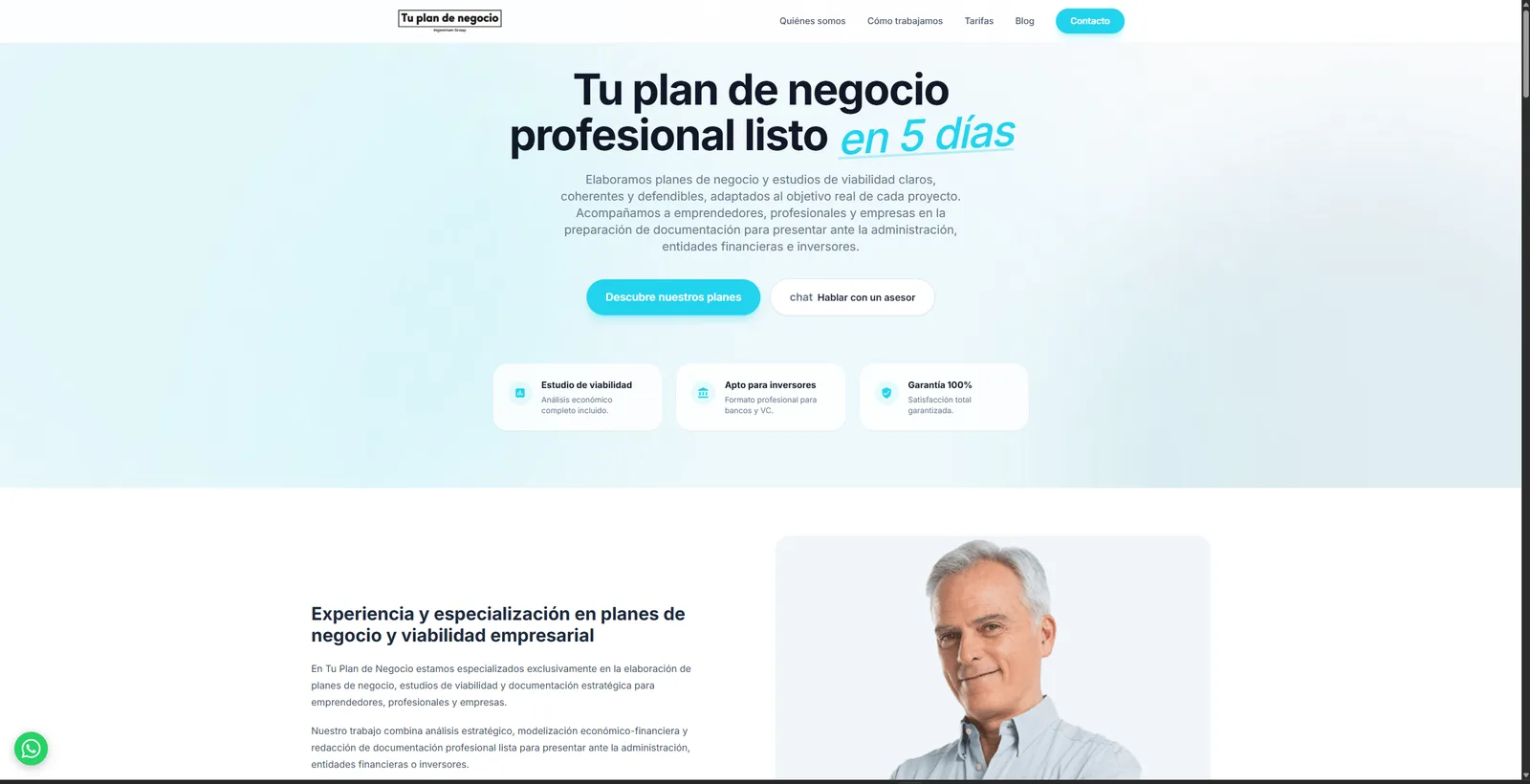
Business plan platform with Stripe payments, order management, invoices and discount codes. Well above the Professional package.
Visit the siteIf you would rather ask before deciding anything, there is nothing else to fill in. I reply within 24 hours.