Stripe + Bizum + card
Bizum is expected by Spanish buyers (especially under-40s). Stripe integrates it alongside card, Apple Pay, Google Pay, and SEPA. If your bank requires Redsys by contract, I add that too.
Online stores built from scratch with Next.js, Stripe, and Bizum. Spanish VAT configured correctly, integration with Correos, MRW, or SEUR, and an admin panel you operate yourself. Higher upfront investment than Shopify, but lower total cost from year one. And the store is 100% yours.
If you sell physical products, digital goods, or services and you want your own online store (not another Shopify store where fees grow with your revenue, not another WooCommerce site you have to maintain technically), this is the right path. Three valid options exist by volume: Shopify is fastest to launch but charges ~€30/month + per-sale commissions; WooCommerce is flexible but requires constant maintenance (plugin updates break things often); custom development with Next.js + Stripe is higher upfront investment but lower recurring cost and no functionality ceiling. I work with the third approach when your monthly volume already pays SaaS fees several times over, or when you need something specific that off-the-shelf platforms don't cover (B2B, product configurator, ERP integration, marketplace, subscriptions).
A serious online store isn't just a cart and a pay button. These are the elements I configure on every project.
Bizum is expected by Spanish buyers (especially under-40s). Stripe integrates it alongside card, Apple Pay, Google Pay, and SEPA. If your bank requires Redsys by contract, I add that too.
21% standard, 10% for food and specific services, 4% for books and essentials. The store calculates the right rate per product and exports the data you need for your quarterly Modelo 303.
If you exceed €10,000/year selling to other EU countries, you must apply the destination country's VAT via the OSS scheme. I configure automatic calculation and quarterly export for your Modelo 369.
LSSI-CE, GDPR, terms of sale, return policy, official cancellation form (14 days), cookie banner with Consent Mode v2. Everything the AEPD reviews if you're audited.
65% of e-commerce sales in Spain complete on mobile. I design checkout for small screens: 1-3 steps max, autofill where possible, no distractions.
See orders as they arrive, manage states (paid, preparing, shipped, delivered), generate shipping labels with your carrier, and issue partial or full refunds without touching Stripe directly.
Correos, MRW, SEUR, or GLS depending on your logistics. Automatic shipping cost calculation by weight and destination, label generation, and tracking sent to the customer by email.
Order confirmation, shipping notification, abandoned-cart reminder, and return email, all with your brand and consistent design. Configured with proper SPF/DKIM so they don't land in spam.
Initial call to understand what you sell, who you sell to, margins, expected order value, monthly volume, and how you currently manage inventory. Defines the real scope.
Figma mockups for catalog, product page, cart, checkout, customer account, and emails. We iterate until the buying flow is clear and fast.
I build the store, connect Stripe + Bizum + carriers, configure VAT per product, set up transactional emails, and fill the legal text with your tax data.
We run test orders with a real card and refund, validate that emails arrive, shipping labels generate, VAT calculates correctly per country, and the panel reflects everything correctly.
DNS, SSL, Search Console + Analytics setup, sitemap submission. You get documentation for the panel and we resolve any remaining questions in a final training session.
To actually sell online (cart + checkout + VAT + shipping), the package that applies is Custom. Starter and Professional cover informational sites or showcase catalogs, not selling.
€790
Only if you need to display products without a checkout: a catalog showcase. Up to 5 pages, contact via form or WhatsApp. If you want to accept payments, jump to Custom.
View Starter Package€1,490
A services website or informational catalog with a blog and advanced SEO, but no integrated checkout. If your plan is to sell, Custom is what applies.
View Professional PackageCustom quote
The real package for an online store: catalog, cart, Stripe + Bizum checkout, correct VAT, carrier integration, admin panel. Timeline and price scoped to catalog size and specific functionality.
Request a QuoteFor most stores in Spain, Stripe is the right primary gateway: it accepts card, Bizum, Apple Pay, Google Pay, and SEPA with competitive fees of ~1.4% + €0.25 on European cards. Redsys belongs only when your bank requires it by contract; PayPal as a secondary option only when its fees fit your margins.
I configure Stripe by default on every store. Redsys gets added when your agreement with BBVA, CaixaBank, or Santander requires it — its integration is older and fees depend on your bank deal, so it's not chosen by technical preference. PayPal joins when you sell to a customer profile that insists on it, not by default: every extra gateway adds checkout complexity and reduces mobile conversion.
Yes. If you exceed €10,000/year selling to consumers (B2C) in other EU countries, you must register for the OSS (One Stop Shop) scheme with the AEAT and apply destination-country VAT, not Spanish VAT. The store calculates the correct VAT by buyer country and exports the data for the quarterly Modelo 369 declaration.
If you sell only in Spain, OSS doesn't apply — standard Spanish VAT and Modelo 303. If you sell to businesses with a valid intra-community VAT number (B2B), the setup is different: invoice without VAT with reverse-charge clause and declare in Modelo 349. The store detects the case from the VAT ID and applies the correct rule automatically.
Shopify is the right call when your monthly volume is low (under €5,000/month) and speed-to-launch beats per-sale fees. Past that volume, the combined cost (plan + Shopify Payments + per-sale commission + apps you need) exceeds within months what a custom store costs — and SaaS platforms cap deep customization (B2B, ERP integration, marketplace) you'll eventually need.
Typical scenarios where Shopify can't reach: product configurators with dependencies between options, prices negotiated per customer or per volume, ERP integration to sync stock and inventory, complex shipping logic by zone or weight, multi-vendor marketplace, recurring subscriptions with custom logic. In the first call we look at your specific case — sometimes Shopify is still the right answer and I tell you so directly.
4-6 weeks for a standard store with 10-100 products, Stripe + Bizum payments, VAT configuration, one carrier integration, and admin panel. 8-16 weeks for B2B with a configurator, ERP integration, multi-vendor marketplace, or subscriptions. Timelines assume content (photos, descriptions, prices, initial stock) is available when needed.
Professional product photos are usually the bottleneck, so commission them in parallel during development. On B2B projects, ERP credentials and access permissions also tend to slip — confirming technical access in week one prevents losing time later. If content slips, you'll know before it affects the launch.
You handle orders, but the admin panel makes it manageable: email on each order arrival, state tracking (paid, preparing, shipped, delivered), and direct shipping-label generation when Correos, MRW, or SEUR integration is configured. At higher volume, integrate Sendcloud for multi-carrier label automation or a 3PL to outsource the warehouse entirely.
Typical inflection points: under ~50 orders/month, manual handling from the panel works perfectly. Between 50 and 500 orders/month, Sendcloud automates label generation and rate comparison. Past ~500 orders/month, or if your margin can't support in-house warehousing, look at a 3PL (Sendiroo, ShipBob, others) to outsource fulfillment completely.
Spanish law requires returns without justification for 14 calendar days after delivery (right of withdrawal). The store includes the official downloadable cancellation form, displays conditions in checkout and confirmation emails, and provides admin-panel flow for state changes, return-label generation, and Stripe refunds (partial or full).
Return shipping cost can be borne by you or passed to the customer — that's set in the terms of sale. Exceptions to remember: custom-made or personalized products have no withdrawal right; downloaded digital products lose the right once download starts if the customer expressly accepted it; perishable goods (fresh food) are excluded. These exceptions get reflected in the terms when they apply to your catalog.
Migration is viable and typically adds 1-2 weeks to the base project. The work includes: exporting products, customers, and historical orders; importing while preserving IDs to keep SEO intact; configuring 301 redirects from old URLs to new ones (critical for not losing rankings); validating VAT and tax data consistency between systems; and planning the cutover so no in-transit orders fall between platforms.
If you're coming from Shopify, we also review which apps you currently use and decide whether to replicate functionality in code or change the flow. Shopify apps deprecate often, so migration is a good moment to clean up dependencies. If you're coming from WooCommerce, migration requires database introspection because of the typical plugin count — more work, but equally viable.
Book a 30-minute call. We review your catalog, margins, expected volume, and decide whether a custom store makes sense in your case or whether a SaaS solution is better. No commitment, honest answer.
Not templates or mockups: two live sites for real clients. Open them and look around.

Beauty and wellness centre in Barcelona. Services, gallery, appointment booking and direct WhatsApp contact.
Visit the site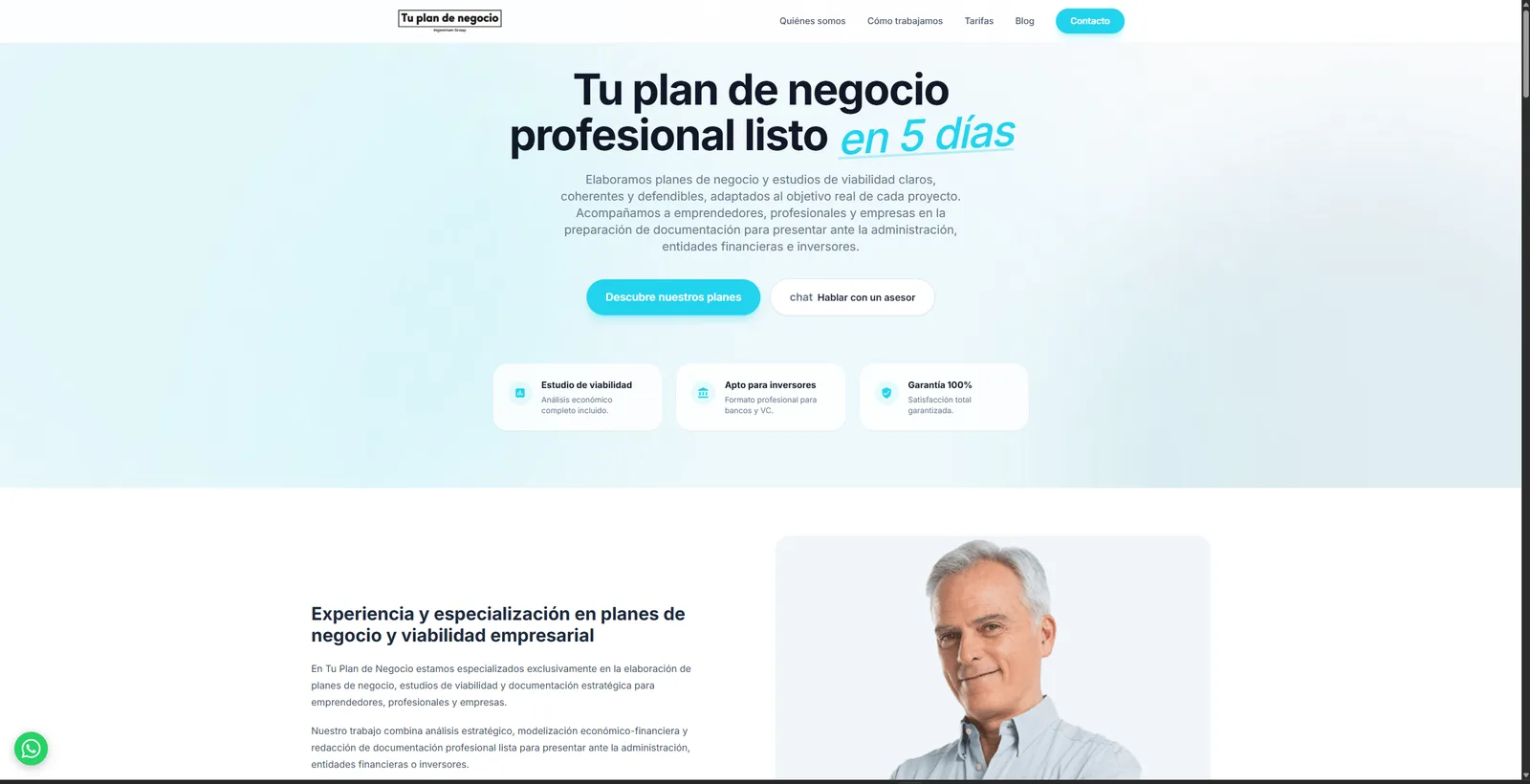
Business plan platform with Stripe payments, order management, invoices and discount codes. Well above the Professional package.
Visit the siteIf you would rather ask before deciding anything, there is nothing else to fill in. I reply within 24 hours.